 Free Tracked Shipping on all Orders Over £50
 Premium & Budget Product Ranges
 Bespoke solutions
 ISO 9001: 2015 certified
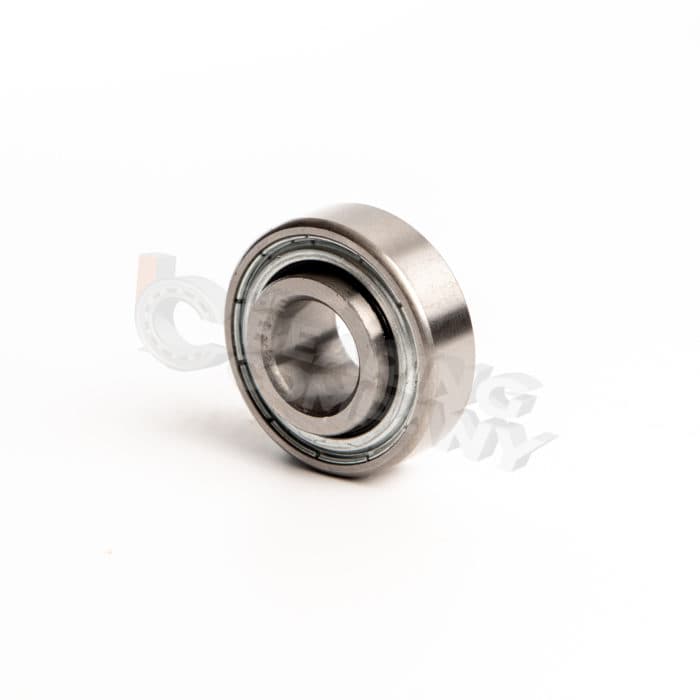
When it comes to ball bearings vs roller bearings, there are many similarities and differences. But their overall purpose is to reduce friction and support loads in rotating machinery.
Ball bearings use spherical balls for higher speeds, while roller bearings use shaped rollers to handle heavier loads. The “best” choice all depends on load, speed, space and operating conditions.
WHAT ARE BALL BEARINGS?
Ball bearings are rolling-element components that use spherical balls positioned between inner and outer rings. A cage maintains even spacing between the balls, allowing the rings to rotate smoothly. Their small contact area reduces rolling friction, making them suitable for high-speed applications.
Depending on their design, ball bearings can accommodate radial loads, axial loads or both. Their compact size and versatility make them widely used in electric motors, bicycles, pumps, lawnmowers and household appliances.
TYPES OF BALL BEARINGS
There are several different ball bearing designs, each of which is suited to different environments, loads and operation conditions. They include:
- Deep groove ball bearings are widely used and can support radial and axial loads, with their low-friction design suiting higher-speed applications
- Angular contact ball bearings have raceways arranged at an angle allowing them to support a combination of radial and axial loads
- Loose ball bearings are individual spherical rolling elements that are used in certain assemblies, races and varying mechanical applications
- Self-aligning ball bearings can compensate for a degree of misalignment between the shaft and housing, making them useful where accurate alignment is difficult to maintain
- Thrust ball bearings are intended primarily for axial loads rather than radial loads
- Miniature bearings provide the benefits of ball bearing construction in smaller assemblies where space is limited

WHAT ARE ROLLER BEARINGS?
Roller bearings replace the traditionally spherical balls with rollers. Depending on the bearing design itself these can be cylindrical, barrel-shaped, tapered or long and narrow.
Roller bearings provide a larger contact area between the rolling elements and raceways, distributing loads more effectively than ball bearings. This makes them ideal for heavy-duty applications.
Their load capacity depends on the bearing design, with different types supporting radial loads, axial loads or both.
Common uses include industrial machinery, gearboxes, conveyors and agricultural equipment that require reliable performance under demanding operating conditions.
TYPES OF ROLLER BEARINGS
When looking at roller bearings as an option, you can decide between:
- Cylindrical roller bearings that use straight cylindrical rollers that offer high radial and load capacity across different axial locations and conditions
- Tapered roller bearings use tapered rollers and raceways that make them ideal for carrying a combination of radial and axial loads
- Spherical roller bearings use barrel-shaped rollers that can accommodate heavy loads and misalignment between shaft and housing
- Needle roller bearings use long, thin rollers that are best used in areas where space is at a premium but substantial radial load capacity is needed

KEY DIFFERENCES BETWEEN BALL BEARINGS AND ROLLER BEARINGS
Although they perform similar tasks, ball bearings vs roller bearings have numerous differences outlined in the table below. This information should however be taken as general guidance with true performance depending on a variety of other factors.
| Feature | Ball Bearings | Roller Bearings |
|---|---|---|
| Rolling element | Spherical Balls | Cylindrical, tapered, spherical or needle shaped rollers |
| Raceway contact | Smaller point type contact | Larger line type contact |
| Load capacity | Lower due to size | Higher due to size |
| Operating speed | Suited for higher speeds | Often suited for heavier loads at lower speeds but some can be used at high speeds |
| Friction | Low due to smaller contact area | Varies by design but are generally higher |
| Typical uses | Motors, appliances, bicycles, pumps and machinery | Gearboxes, industrial equipment, agriculture and conveyors |
LOAD CAPACITY
Ball bearings contact raceways over a small area, while rollers distribute forces across a wider surface, generally supporting heavier loads. Capacity depends on bearing design and load direction. Check manufacturer ratings to ensure the bearing suits the application.
SPEED AND FRICTION
Ball bearings typically generate less rolling friction, making them suitable for high-speed applications. Roller bearings generally support heavier loads but may create more friction. However, speed limits vary with design, lubrication, load, temperature and bearing size.
DURABILITY AND MAINTENANCE
Bearing durability depends on correct selection, lubrication and operating conditions, not simply bearing type. Excessive loads, contamination, misalignment and heat can shorten service life.
You should always follow manufacturer recommendations for inspection, maintenance and replacement to ensure reliable performance.
APPLICATIONS OF BALL BEARINGS AND ROLLER BEARINGS
Both bearing families are used across automotive equipment, manufacturing, agriculture and general machinery. Although their applications can overlap, the final choice is determined by individual requirements.
An electric motor, for example, often benefits from the low friction and speed capability of a ball bearing. Deep groove ball bearings are commonly used for this type of application.
Heavy industrial machinery may place much greater radial loads on a bearing. Cylindrical or spherical roller bearings are typically better suited where higher load capacity is required.
Gearboxes can use either ball or roller bearings depending on the forces involved. A tapered roller bearing may be selected where combined radial and axial loading is present, while other gearbox designs can use ball bearings or cylindrical rollers.
Agricultural machinery also uses both types, with the correct bearing depending on factors like load, speed, contamination, shock and available space.

BALL BEARINGS VS ROLLER BEARINGS: WHICH SHOULD YOU CHOOSE?
Ball bearings are often the most ideal option for applications in need of high speed and low friction operations under moderate loads. Roller bearings on the other hand are better suited to heavy loads at lower speeds. The exact choice will all depend on different operating requirements, including:
- Load size and direction
- Required speed
- Available space and shaft dimensions
- Alignment
- Lubrication needs
- Temperature, contamination and maintenance options
When looking at replacements for your equipment, you should check the designation, dimension and manufacturer recommendation for the right bearing.
Here at The Bearing Company, we have over half a century of experience in supplying bearings and other engineering essentials adhering to ISO 9001 certification. With competitive pricing, expert service, next day delivery options and free UK shipping on orders over £50, we have cemented ourselves as the industry leader in bearing needs.
Shop our wide range of bearings today or contact the team for further guidance on making your decision.